
From Composable to Composed: Why SitecoreAI Signals a New Chapter for DXP
We’ve long talked about “composable DXP” as the future: picking modular, API-first components and assembling the stack that makes the most sense for each organisation. That flexibility has worked very well, but with the launch of SitecoreAI, we’re stepping into a new level of maturity.
It’s not just about assembling building blocks anymore. It’s about composing experiences, with AI deeply embedded, orchestrating, assisting, and accelerating the entire marketing flow.
Even Without Being in Orlando, SitecoreAI Still Managed to Reshape My Week 😅
Even though, due to some personal constraints, I didn’t get the opportunity to join Sitecore Symposium this year in Orlando, I’ve been following it very closely. Mostly because I was preparing an intensive session and workshop for a customer exploring a full suite re-platforming into Sitecore DXP.
As you can imagine, having a Symposium one week before my workshop meant that everything I had planned, every slide, narrative, demo, etc. suddenly needed a rethink. And a big one!
So there I was: sprinting to enable everything in my sandbox, reshaping strategy and messaging on the fly and trying to learn as much as possible about the new SitecoreAI platform. (Shoutout to Sitecore for the rapid support, access, docs, previews, and material. Helped me a lot!)

What SitecoreAI Actually Brings
A Unified, Intelligent DXP
SitecoreAI folds content, data, personalization, analytics, and orchestration into one SaaS-native platform, with AI at its core. At the center layer is the new Studio: a workspace where marketing teams and agencies can plan, create, and optimize experiences with AI-powered agents.
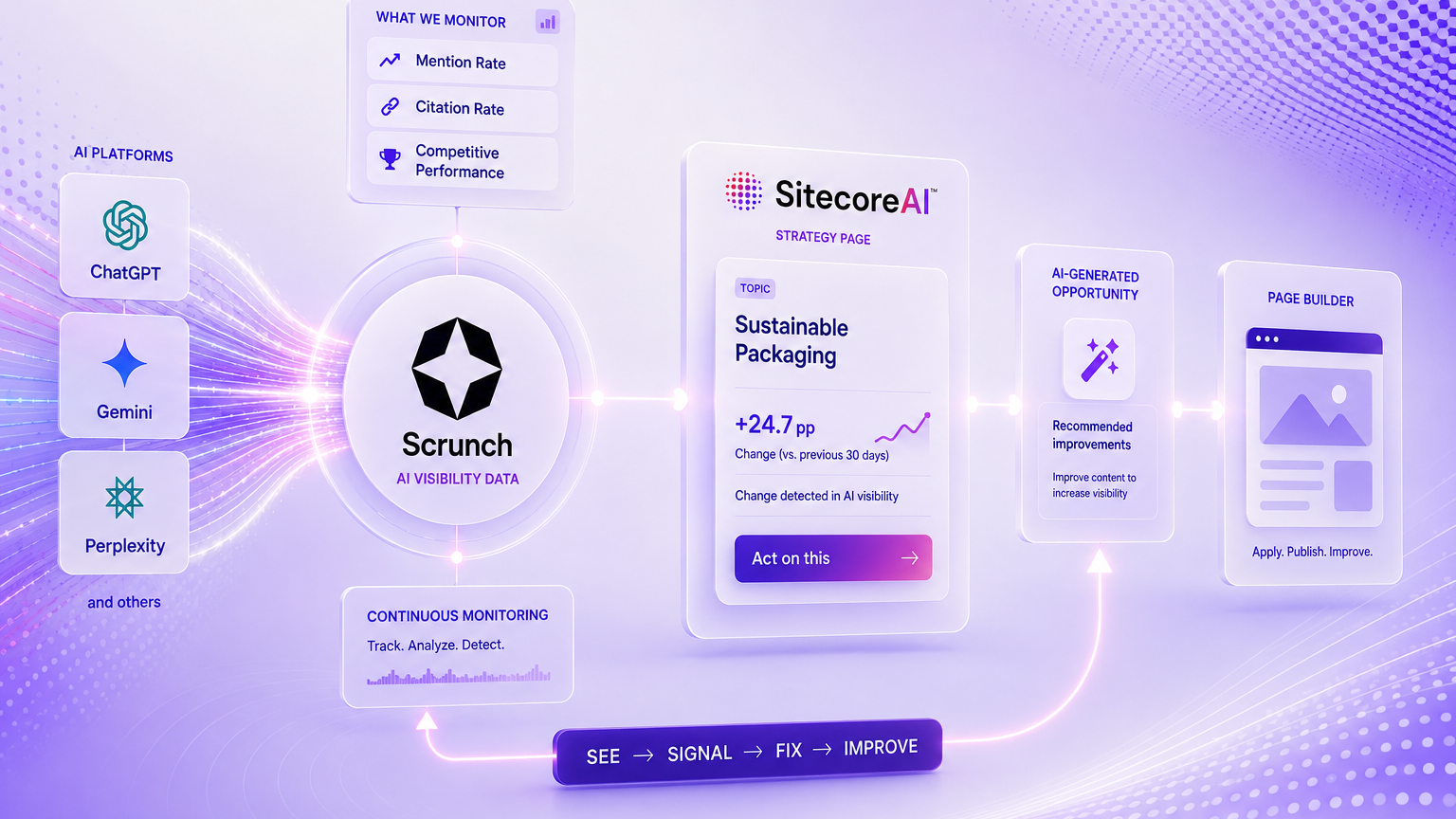
These agents can generate and translate content, automate migrations, orchestrate campaigns from signals in the market to briefs, personalize experiences, and more. Even more: you can actually build your own agents with no code, adapting the system to your actual workflows rather than the other way around.
For XM Cloud customers, the upgrade path seems to be straightforward, the AI capabilities simply “switch on” without a major migration. And it actually happened that way, the Monday after the announcement, all customers got a great surprise when logged into their Sitecore Portal, SitecoreAI was already replacing the XMC apps.

The important part here is not only the features themselves, but what they can enable: faster orchestration, unified workflows, and intelligence integrated into the daily flow of digital operations.
Why “Composed” Is an Upgrade Over “Composable”
Composable gave us modularity, but also complexity, let's be honest here! We built every integration, connector, and workflow piece by piece. But that flexibility introduced its own complications: governance, data consistency, team coordination, usual operational weight, and more.
SitecoreAI’s composed approach keeps the flexibility but removes much of the friction:
- AI agents coordinate across content, personalization, assets, and delivery.
- Workflows become unified instead of living in a bunch of different tools.
- Time-to-value shrinks dramatically, what took weeks can often be done in days or hours.
- Extensibility remains, you can still plug in your frameworks, your components, your custom integrations, etc.
Instead of assembling pieces, you’re now composing outcomes.
What This Means in Practice (Especially for Those of Us in the Field)
Given the work we do, bridging architecture, design agencies, content teams, personalization strategy, and global delivery, I think SitecoreAI lands at a very convenient moment.

- Discovery and design align faster: with content, layouts, and personalization orchestrated in one place, we can shorten cycles and get everyone looking at the same canvas earlier.
- Marketing teams gain autonomy: with AI driving content and personalization tasks, they rely less on dev cycles and can experiment safely.
- Complex estates become manageable: for clients with multiple brands or legacy digital ecosystems, the migration and orchestration features simplify both the transition and ongoing operations.
- We maintain composable freedom, but with guardrails: this is important for vendor-agnostic strategies. Flexibility stays, chaos reduces.
- It prepares us for AI-driven discovery experiences: as user behavior moves from navigation to “ask and receive” having AI deeply integrated into delivery becomes essential.
But Let’s Stay Realistic
Composed doesn't mean automatic success. This kind of platform still needs:
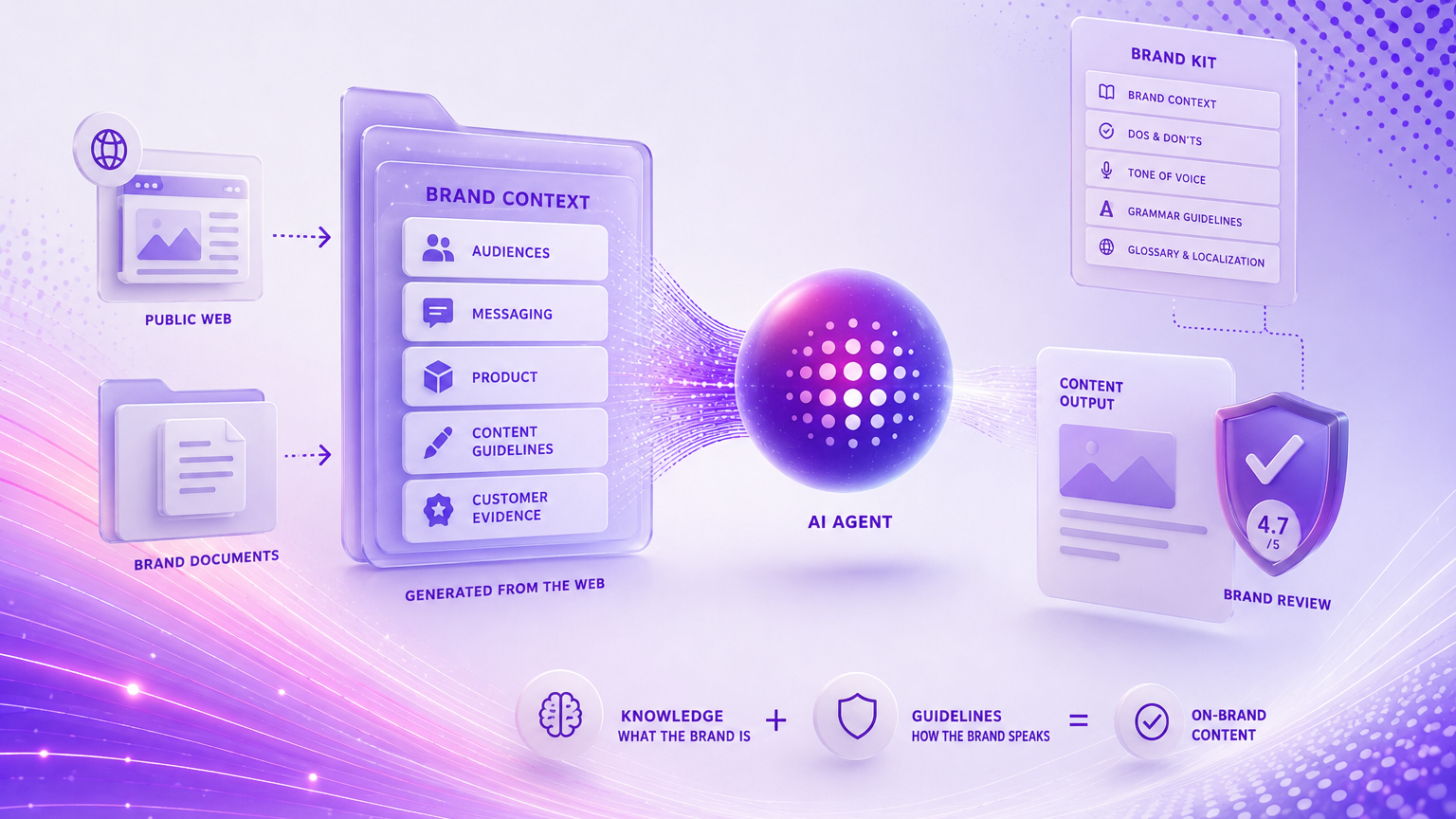
- Solid governance around brand and AI output
- Thoughtful architecture (bad front-end practices will always catch up)
- Proper change management so teams actually use the new capabilities
- Strategic clarity on when AI should accelerate vs. when humans should lead
Closing Thoughts — More Than a Product Launch, It’s a Signal
SitecoreAI is not just a new capability drop. It’s a shift in operating model.
It takes the principles of composable architecture and layers intelligence, orchestration, and cohesion on top, creating a DXP that works with you, not just for you.
For those of us guiding clients through digital transformation, this marks a new chapter. We’re not only assembling systems anymore. We’re composing experiences, with AI as a first-class collaborator.
I'm anxious to see how this is going to reflect in the coming reports, Magic Quadrants, etc.. Is a new category going to arise now? If so, would SitecoreIA be a lonely leader there?
Stay tuned! I'll be sharing some more insights around SitecoreAI, Studio, Agents and Marketplace soon!
Thanks for your reading!